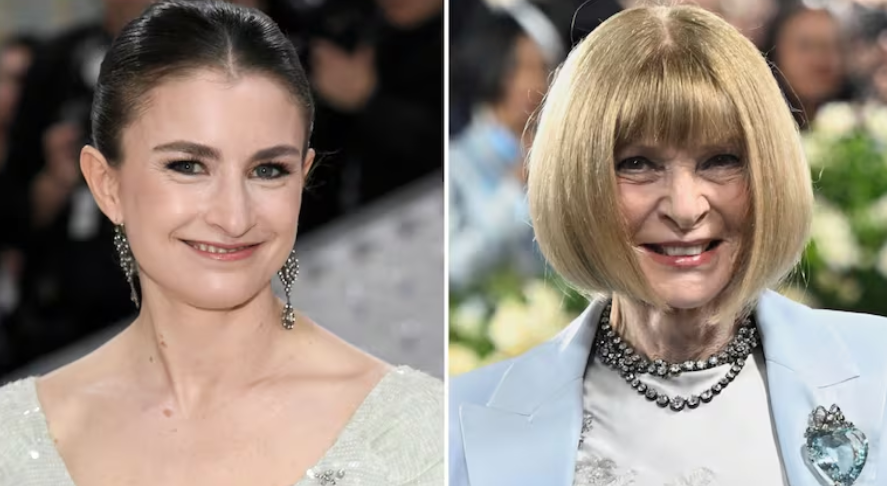
On September 2, 2025, Vogue named Chloe Malle the new Head of Editorial Content for the U.S. edition—effectively the top editor—marking the most consequential leadership handoff at the magazine since Anna Wintour took the helm in 1988. As part of Condé Nast’s global restructuring, the traditional “editor-in-chief” title has been sunset; Malle will run the American magazine and guide its digital coverage while reporting to Wintour, who remains Vogue’s global editorial director and Condé Nast’s chief content officer.
The appointment is both continuity and change. Continuity, because Malle is a Vogue lifer who understands the brand’s rhythms. Change, because her mandate is expressly cross-platform and audience-driven, reflecting how fashion media is consumed today—across print, web, video, audio, social, and live events. In her words, “Fashion and media are both evolving at breakneck speed, and I am so thrilled—and awed—to be part of that.
Meet Chloe Malle
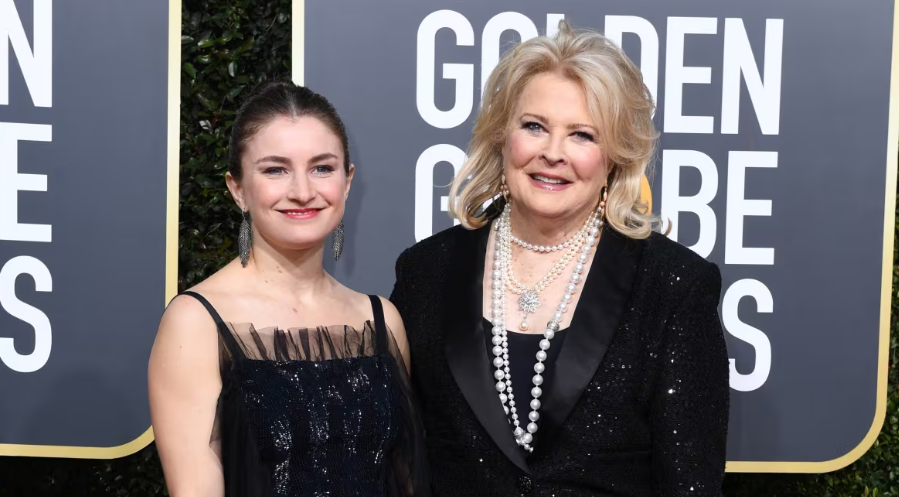
If her last name rings a bell, it’s because Chloe is the daughter of actress Candice Bergen and the late French film director Louis Malle. Born in New York City in 1985 and raised partly in Los Angeles while her mother starred in Murphy Brown, she later studied at Brown University before beginning a career in journalism. She wrote for outlets including The New York Times, The Wall Street Journal, and Architectural Digest before joining Vogue. Encyclopedia BritannicaPeople.com
Malle’s entrée to Vogue came in 2011, when she was hired as social editor, a role that broadened swiftly as she contributed across fashion, culture, weddings, homes, and health. From 2016 to 2023 she served as a contributing editor, then became editor of Vogue.com in fall 2023. Along the way she co-created The Run-Through with Vogue podcast—hosting alongside Chioma Nnadi—and developed a reputation for range: cover interviews, commissioning essays, and reporting on moments where fashion intersects with the wider world.
The Digital Track Record That Propelled Her
One reason Malle rose so quickly: results. Since taking over Vogue.com, direct traffic doubled and the site posted double-digit growth across key metrics—unique views, time spent, and content output—especially around tentpoles like the Met Gala and Vogue World. She expanded editor-led newsletters and launched shareable, community-building franchises such as “Dogue” (a wry, dog-centric editorial moment that delighted readers) and the Vogue Vintage Guide. She also elevated the Weddings vertical, boosting output by 30% and delivering record engagement.
Those numbers matter because they map directly to Condé Nast’s strategy: global leadership, local expression, and platform-agnostic storytelling. In announcing her promotion, the company highlighted Malle’s plan to “embed [herself] even more fully across print, video, and events—fostering the true cross-platform plurality that our audience craves and demands.” That phrase—cross-platform plurality—is a tell. Expect a Vogue that meets readers wherever they are, without sacrificing the brand’s polish. Condé Nast
What Will “Chloe’s Vogue” Look Like?
1) More Cross-Platform Storytelling—By Design
Malle’s own description of her remit emphasizes integration: print features that bloom into video, podcasts that feed reporting, web packages that culminate in live experiences. The connective tissue is editorial voice and reader usefulness. That’s consistent with Wintour’s framing of Malle as someone who balances the magazine’s “long, singular history” with a future “on the front lines of the new.” Translation: the September-issue gravitas remains, but expect quicker pivots, more serialized packages, and a tighter loop between social conversation and reported features.
2) A Bigger Place for Service Journalism—Without Losing Fantasy
Malle’s stewardship of Weddings and Vintage hints at a service layer that readers can act on: how to shop well, how to archive and restore, how to dress for a real life filled with jobs, families, and shifting budgets. It’s not anti-aspirational; it’s a modern form of it—craft, heritage, and smart consumption rather than disposable buzzy buys. Her successful expansion of editor-led newsletters suggests more personal, utility-driven touchpoints from named editors (and stylists) directly to readers’ inboxes.
3) Culture, Not Just Clothes
Wintour’s statement praised Malle for understanding fashion’s “big picture… the changing fabric of modern life.” You should expect continued coverage that treats fashion as a lens for sports, politics, tech, and identity—exactly the blend Malle undertook when she commissioned essays on grief, interviewed novelists like Chimamanda Ngozi Adichie, and reported cover stories that connected wardrobes to worldviews.
4) A Warmer Tone—With Editorial Steel
Colleagues describe Malle as collaborative and joyful—editorial traits that tend to produce fresher ideas and broader sources. That doesn’t mean soft. The best Vogue stories retain rigor; warmth just makes the machine run faster. As Wintour put it, Malle’s “original thinking and hard work” make her a “secret weapon.” Expect that mix to shape the desk culture and the pages readers see.
5) The Podcast Era as a Pipeline
As co-host of The Run-Through, Malle knows audio intimately—how it can carry the voice of Vogue into commutes and kitchens, and how it can incubate sources and ideas that later land in print or on the site. Whether she continues hosting long-term remains to be seen, but the show already serves as a laboratory for tone and talent. Even in her first week post-announcement, the podcast was weaving behind-the-scenes reportage from the October cover into the episode slate.
Early Signals: Western Romanticism on the October Cover
If you’re looking for immediate clues, look at the October 2025 issue featuring Kendall Jenner and Gigi Hadid—two industry stalwarts styled with a distinctly American, equestrian romance in Jackson Hole. The choice isn’t radical, but it’s savvy: glamorous imagery with a touch of Western practicality; an enduring friendship rather than a manufactured feud; A-list familiarity packaged with motion (galloping horses) that plays beautifully across print, video, and social. Malle conducted the cover interview herself, and the cross-platform packaging began right away, with podcast tie-ins offering “tales from the cover shoot.
Covers alone don’t define an editor, of course—but early choices often telegraph tone. Here, the message reads: unabashedly Vogue spectacle, reframed through relationships and Americana—a mood in step with U.S. cultural appetites in 2025.
The Wintour Factor: Continuity, Mentorship, and Guardrails
No succession at Vogue happens in a vacuum. Wintour remains the brand’s global north star and Condé Nast’s most powerful editor, steering franchises like the Met Gala and Vogue World while overseeing content across markets. Malle will run day-to-day editorial for the U.S. title with Wintour “just down the hall as [a] mentor,” an arrangement that blends autonomy with access. It also means Malle’s “stamp” likely won’t involve flashy ruptures; rather, she’ll be expected to modernize the cadence and broaden the tent while preserving Vogue’s authority.
How the Industry Is Reading the Move
Trade and mainstream coverage has framed the appointment as both expected and strategic. The Guardian and The Times (UK) noted the redefined scope of the job within Condé Nast’s global structure, underscoring that power is now distributed across “heads of editorial content” around the world. Meanwhile, reporting from Business of Fashion and Puck emphasized Malle’s digital credentials and long apprenticeship under Wintour—attributes prized in a system built for multiplatform publishing. The GuardianThe TimesThe Business of FashionPuck
The upshot: Malle is not a surprise disruptor parachuting in from tech or TV; she’s an inside editor trusted to deliver growth without diluting the brand.
The Playbook: Five Concrete Ways Malle Can Put Her Stamp on Vogue
1) Build “packages,” not one-offs.
Expect a steady drumbeat of editorial packages that arc across platforms: a reported feature that seeds a video, spawns a podcast roundtable, drives an interactive shopping guide, and culminates in a live salon. It’s what her cross-platform plurality line implies—and what her track record (newsletters, Weddings expansion, franchised series) already shows she can deliver. Condé Nast
2) Use Vogue’s authority for service journalism that respects readers’ intelligence.
Think: smart capsule-wardrobe builds by stylists; deep-dive explainers on textile sustainability; literate beauty coverage that goes beyond haul culture; and a Vintage Guide 2.0 that treats resale as taste, not trend. Done right, this keeps Vogue aspirational while teaching readers how to buy better.
3) Expand who gets a cover—and how a cover behaves online.
The brand will always feature megastars, but Malle can widen the aperture to include athletes, artists, and creative polymaths with real communities. Digitally, covers must behave like content ecosystems: behind-the-scenes social, explainers on styling choices, long captions that read like mini-essays, and companion playlists or photobooks for superfans. (Her first outing’s podcast integration is a proof of concept.)
4) Treat the newsroom as a talent magnet.
Vogue’s voice is forged by editors, stylists, and writers. Malle’s collaborative reputation and podcast rolodex position her to recruit distinctive voices—especially across culture and nonfiction longform. Commissioning essay series (à la the grief project noted in the announcement) is a smart way to build authority and community simultaneously.
5) Keep the fun.
“Dogue” worked because it was witty without being cynical. A little playfulness is sticky in feeds and human in print; it travels. Malle can greenlight more ideas in this key—intelligent amuse-bouches that deepen affinity.
Headwinds—and Why They’re Surmountable
Every legacy media editor faces the same landscape: a volatile ad market, platform algorithms in flux, and an audience whose attention is split across apps. The risk for fashion magazines is to lean too hard into either ultra-luxury fantasy (and feel out of touch) or pure commerce (and flatten into a catalog). Malle’s biography and metrics suggest she’s well-placed to thread the needle.
She’s not allergic to star power—but she’s also edited essays, reported real features, and built growth through editorial ideas rather than gimmicks. With Wintour’s backing, she has room to protect long-lead reporting even as she spins up faster digital beats. And, crucially, as a Vogue.com editor turned brand leader, she understands what converts a scroll into time-spent into loyalty—a conversion stack magazines didn’t have to master in the newsstand era.
The First Year: What to Watch
-
Cadence of “event” issues and digital tentpoles. Does she engineer moments (like Met Gala season) to cascade across formats with clear arcs?
-
Newsletter expansion. Editor-led voices are a Malle specialty. Watch for subject-matter newsletters (vintage, beauty science, interiors) that carry Vogue’s tone into inboxes.
-
Weddings—and beyond. That vertical’s turbocharge under Malle could be replicated in other lifestyle lanes (Vogue Homes, Travel, or Food) with the same mix of taste and utility.
-
Audio strategy. Whether or not she remains on-mic, the podcast will likely function as an R&D lab and marketing engine for covers and packages.
-
Balance of icons and discovery. Expect more room for new designers, stylists, and creatives—interwoven with A-list tentpoles to keep the halo bright. (Industry reporting points to this balance as the sensible path under the redefined job.) The GuardianThe Times
So—Who Is Chloe Malle, Really?
She’s a classically trained magazine editor fluent in a post-print world; a writer who enjoys the long game of a narrative and the quick hit of a clever franchise; a collaborator who has built growth through ideas that stick. She arrives with enormous goodwill inside Vogue and the mentorship of the most famous editor on earth. Her stamp won’t be a shock pivot; it will be an editorial feel—warmer, more conversational, and more integrated—laid over the brand’s imposing bones.
If you loved Vogue for its authority and glamour, you’ll still find both. If you’ve wanted more connective tissue between those breathtaking fashion narratives and the ways people actually dress, shop, mourn, marry, and live, Malle has already shown she knows how to make that bridge. The next year will show how far—and how gracefully—she can carry readers across it.