
For decades, flying cars have captured the imagination of futurists, engineers, sci-fi writers, and everyday people who dreamed of leaving crowded roads behind and soaring above traffic jams. From The Jetsons to countless blockbuster movies and novels, the image of jet-propelled cars crossing the horizon has been iconic.
Until recently, however, flying cars seemed destined to remain fantasy — prototypes built but never truly viable, prohibitively expensive, or too complex to certify for real use.
Then came AirCar — a breakthrough flying car developed in Slovakia by the engineering team at Klein Vision, led by Professor Štefan Klein and co-founder Anton Zajac. What once felt like pure sci-fi took a monumental step toward reality when AirCar completed successful test flights and received official certification as an aircraft. The result is a vehicle that blurs the lines between road and sky transportation, fundamentally challenging how we think about travel.
The Longstanding Dream of Flying Cars
Why Flying Cars Captivated Generations
Flying cars symbolize freedom — the ultimate solution to ground traffic limitations and geographic constraints. They represent the dream of personal mobility without boundaries, where one might drive on highways one day and glide through the sky the next.
Yet this dream proved resistant to reality: designing a vehicle that meets functional, safety, regulatory, and economic demands both as a car and an aircraft is an immense engineering challenge. Cars and airplanes are fundamentally different machines, with conflicting design priorities: cars prioritize crash safety and stability on land, while aircraft prioritize aerodynamic efficiency, lightweight construction, and flight control — not always compatible traits.
Despite these challenges, numerous companies and inventors attempted flying car projects over the last century, with varying degrees of success and failure. Many remained at the prototype stage or lacked key safety certifications, keeping them outside real-world use.
The Story of AirCar: From Sci-Fi to Real Flights
Slovakia’s Engineering Miracle
AirCar isn’t just another concept model — it’s a working dual-mode vehicle that can drive like a regular car on public roads and, with a push of a button, transform into an aircraft capable of sustained flight. This achievement reflects decades of experimentation and design, but truly came to life under the umbrella of Klein Vision, a Slovakian startup company.
The brain behind this project is Professor Štefan Klein, an aviation enthusiast and engineer who had been developing flying vehicle concepts since the late 1980s. After earlier projects — including work on other flying car designs — Klein turned his focus to a new, more practical approach: a vehicle that didn’t just look futuristic but actually worked.
Developing the AirCar Prototype
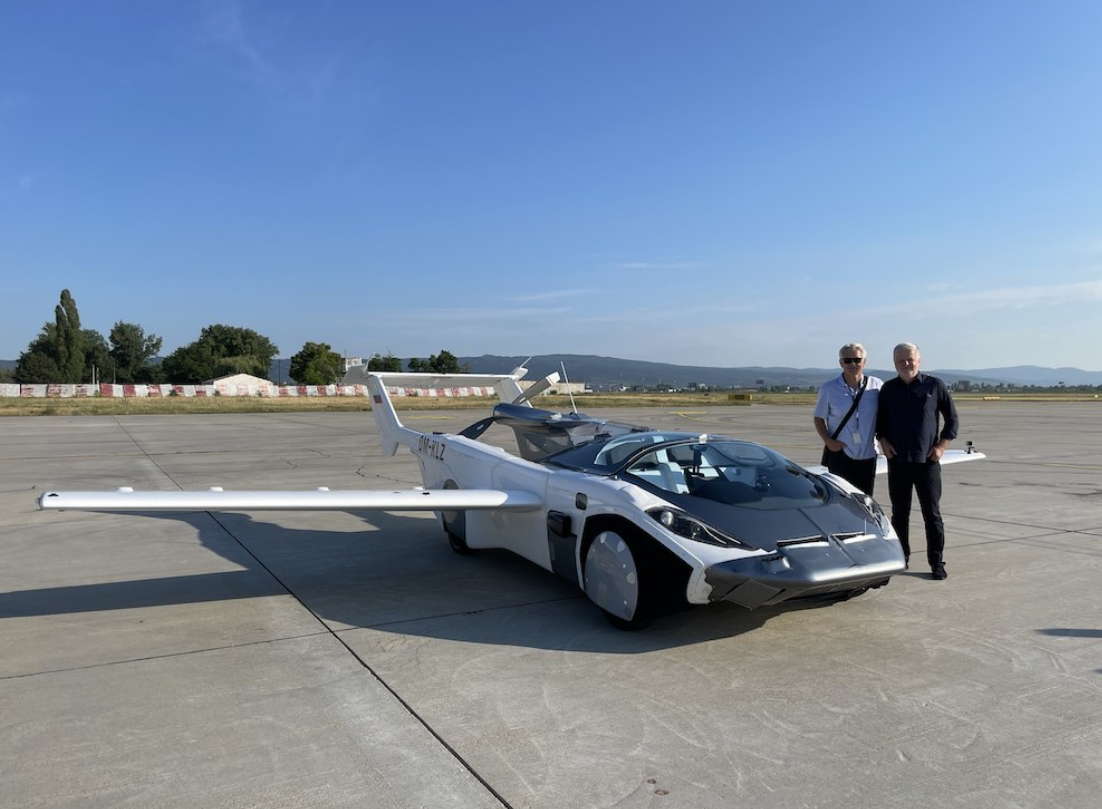
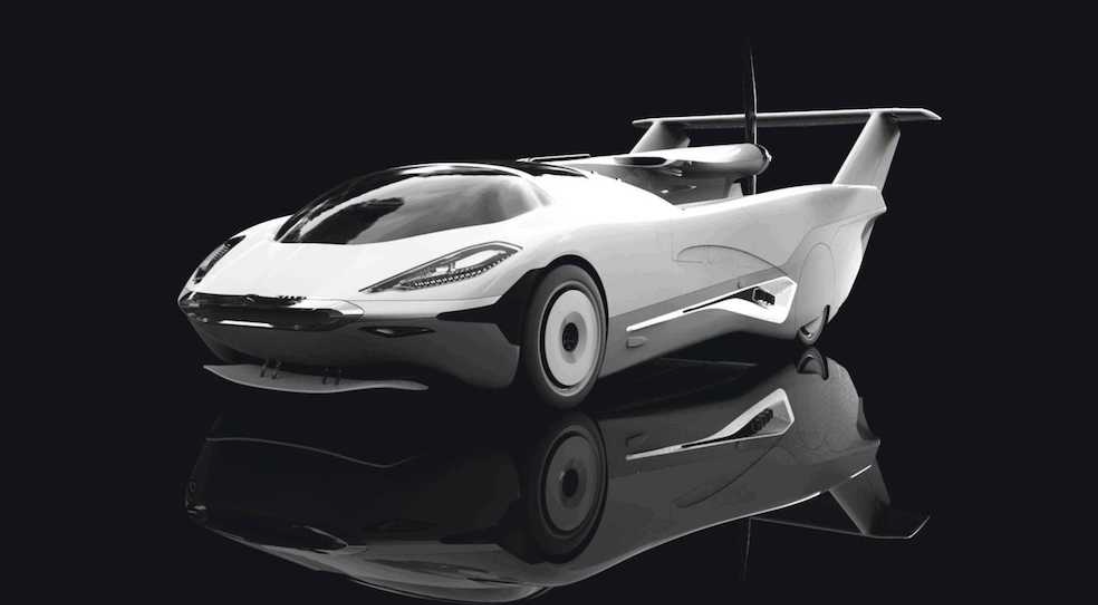
The AirCar prototype is a two-seat hybrid machine that transitions between car mode and aircraft mode in approximately two minutes and 15 seconds. It uses a combination of retractable wings, a telescoping tail, and a traditional pusher propeller mounted at the rear. When in car mode, it resembles a sleek sports coupe; when transformed, its aerodynamic profile allows it to fly like a light aircraft.
Key features of the AirCar design include:
-
Carbon-fibre composite body over a steel subframe for strength and weight reduction.
-
Foldout wings and extended tailbooms that deploy during flight mode.
-
A BMW-built petrol engine that powers both ground and air movement, eliminating the need for multiple powertrains.
-
A ballistic parachute system as a safety feature in case of emergency.
This combination allows the AirCar to travel on roads like a typical vehicle, then take off into the sky without sacrificing core functionality as either machine.
Record-Setting Flights and Certification
From Airport Test Flights to Recognition
One of the most pivotal moments in the AirCar experiment came on June 28, 2021, when the AirCar completed a 35-minute inter-city flight from Nitra to Bratislava, two major Slovakian cities. It was the first time a flying car had completed a point-to-point flight, not just brief hops or hover tests. After landing at the destination airport, the vehicle was transformed back into car mode in under three minutes and driven into the city — fulfilling the dream of combined aviation and road mobility.
Following this demonstration, the Slovak Transport Authority conducted rigorous flight tests totaling 70 hours and over 200 takeoffs and landings — a major requirement generally aligned with European Aviation Safety Agency standards (EASA). The result was a Certificate of Airworthiness officially recognizing the AirCar as an aircraft. This marked a historic milestone: for the first time, a flying car had been certified for flight.
What Certification Means
Airworthiness certification is no small feat — it requires evidence that a vehicle can operate safely and consistently under expected conditions. The award signifies that AirCar isn’t a fringe prototype, but a verified aircraft in the eyes of aviation authorities. While it still must meet road-legal requirements to be sold as a normal car, this step laid the groundwork for future commercial use, showing regulators and the public that flying cars are more than conceptual fantasies.
Technical Specifications of the AirCar
While specific specifications can vary depending on future production models, here’s a general overview of what the AirCar prototype has demonstrated:
Performance in the Air
-
Takeoff speed: ≈ 120 km/h (≈ 75 mph) from a runway of a few hundred metres.
-
Cruising speed: ≈ 170 km/h (approx. 105 mph).
-
Maximum altitude reached: ≈ 2,500 m (8,200 ft).
-
Range: Estimated around 1,000 km under optimal conditions.
-
Transformation time: Approx. 2 min 15 sec from car to aircraft mode.
Road Performance
-
Acts as a four-wheel road-legal car with performance similar to a sport coupe.
-
Uses standard petrol fuel, eliminating the need for airport-specific infrastructure.
-
Drives on public roads like a conventional vehicle, offering true dual-mode capability.
By merging familiar automotive technology with aeronautical features, AirCar places itself in a unique category — neither purely aircraft nor exclusively a car, but truly both.
The Engineering Behind AirCar’s Success
Design Philosophy
At the heart of AirCar’s success is its integrated design approach. Unlike many earlier flying car concepts that essentially strapped flight components onto car bodies, AirCar was conceived from the beginning as a hybrid aircraft-automobile. This meant engineers had to balance structural integrity, aerodynamics, weight distribution, and mechanical complexity — ensuring that when wings fold, controls shift, and systems transition, safety isn’t compromised.
From the aerodynamic fuselage that doubles as a lift-producing body to the retractable tail surfaces, every part serves dual purposes. Detailed computational fluid dynamics (CFD) simulations, wind tunnel analysis, and iterative prototyping helped refine the design over years of testing and refinement.
Testing Rigor and Safety
The demanding test program — with hundreds of individual takeoffs, landings, turns, and flight manoeuvres — wasn’t simply about proving AirCar could fly. It was about proving reliability and stability in conditions representative of real-world use. This included:
-
Evaluating handling in crosswinds and turbulence.
-
Stress-testing structural integrity at various speeds and altitudes.
-
Testing redundant systems for safe operation.
-
Ensuring mechanical transitions between modes were consistent and fail-safe.
The certification process likely covered not only flight performance but also emergency procedures, pilot training requirements, safety protocols, and ongoing inspection regimens — underscoring how serious regulators are about building trust in novel vehicles.
Challenges Ahead
Licensing and Regulation
Even with airworthiness certification, flying cars like AirCar face regulatory complexity. Operators will need both a conventional driver’s licence and a pilot’s licence to use the vehicle in its full dual mode — meaning owners must master two distinct sets of skills and regulations. This could limit early adoption to enthusiasts or professionals willing to undertake specialized training.
Infrastructure Needs
Another challenge is infrastructure. AirCar requires runways to take off and land — it cannot simply hover or use vertical lift. This means its use will initially be tied to airports, private strips, or specialized facilities, rather than city centres or urban rooftops. Integrating flying cars into normal transportation patterns will likely take coordinated planning, new infrastructure, and updated air traffic systems.
Cost and Accessibility
Early production models are expected to be expensive — potentially hundreds of thousands of dollars or more — placing them out of reach for average consumers. This economic barrier may limit flying cars initially to wealthy buyers or commercial services like air taxi companies.
Implications for the Future of Transportation
Despite challenges, the advent of AirCar marks a profound shift in thinking about personal transportation.
Beyond Ground Mobility
Flying cars may one day reduce reliance on roads, shrinking current transportation bottlenecks. Mid-distance travel — journeys too long for comfortable driving but too short for efficient commercial air travel — could especially benefit. Imagine driving to a local airstrip, taking off, and landing near your destination hours quicker than highway traffic would allow.
New Market for Hybrid Vehicles
Companies beyond Klein Vision are already exploring similar ideas, and the creation of an officially certified flying car paves the way for broader investment, innovation, and competition. Utility services, emergency responders, tourism, and logistics could all leverage dual-mode vehicles in new and creative ways.
Cultural Shift
Perhaps most importantly, AirCar signals that science fiction isn’t just symbolic anymore — it’s closer to practical reality. People may soon view flying cars as not just futuristic icons, but real, viable transport options within a generation.
Conclusion: Slovakia’s Leap Into the Future
The story of AirCar is remarkable not only because Slovakia — a relatively small country without a major automotive or aerospace manufacturing reputation — led this revolution, but because it shows what dedicated engineering and regulated innovation can achieve. By successfully blending a ground vehicle with an aircraft and earning real certification, Klein Vision has pushed humanity closer to a future once reserved for science fiction.
Slovakia’s AirCar represents a turning point: flying cars are no longer mythical objects, but increasingly tangible realities. As technology continues to evolve and regulatory frameworks adapt, we may soon see more of the world’s skies filled with dual-mode vehicles — fulfilling a dream humanity has chased for generations.


