
It started as one of those short, scroll-stopping clips that flood social media every day. A woman stood in her kitchen, smiling at the camera, holding something most of us would normally toss straight into the trash: a banana peel. Without much explanation, she rubbed the inside of the peel gently on her forearm, taped it in place, and waited.
The caption teased a dramatic result: “You won’t believe what happened next!”
Within hours, the video racked up thousands of comments. Some viewers swore by the trick. Others called it nonsense. A few were genuinely curious. Could something so simple, so ordinary, really have a noticeable effect on the skin?
The truth behind what happened next is fascinating—not because it was magical, but because it reveals something powerful about natural remedies, skin science, and how everyday items can sometimes surprise us.
Let’s break it down.
Why Would Anyone Put a Banana Peel on Their Skin?
At first glance, the idea sounds strange. Banana peels are slippery, slightly sticky, and usually destined for the compost bin. But for decades, people around the world have used banana peels in traditional home remedies.
The inside of a banana peel contains:
-
Potassium
-
Vitamin C
-
Vitamin B6
-
Magnesium
-
Antioxidants
-
Natural oils
-
Small amounts of fruit acids
These nutrients are beneficial when eaten—but could they also help the skin?
That question is what motivated the woman in the viral video. She had read online that banana peels could:
-
Soothe irritated skin
-
Reduce redness
-
Help with minor acne
-
Moisturize dry areas
-
Calm itching
-
Improve skin glow
Skeptical but curious, she decided to test it herself.
The Experiment: Step by Step
She didn’t just rub the peel randomly. She followed a simple method:
-
She washed her arm thoroughly with mild soap.
-
She patted it dry.
-
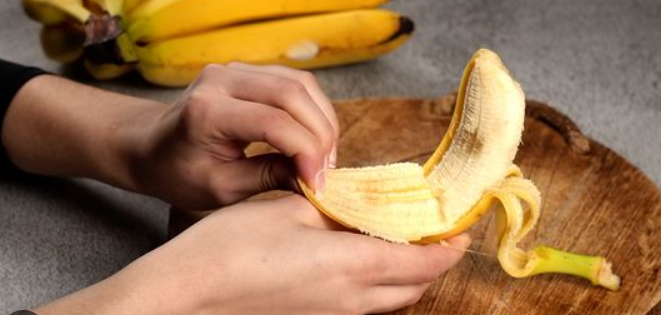
She cut a fresh banana peel into a small section.
-
She placed the inner white side directly onto her skin.
-
She secured it with medical tape.
-
She left it on for about 20 minutes.
Then she removed it and gently rinsed her arm with lukewarm water.
So what happened?
What Happened Next: The Immediate Effect
When she removed the peel, the first thing she noticed was how soft her skin felt.
There was:
-
A slight glow
-
Reduced dryness
-
A smoother texture
-
A subtle cooling sensation
She had a small patch of mild redness on her arm before the experiment. After removing the peel, it appeared less irritated.
It wasn’t dramatic. It wasn’t life-changing. But it was noticeable.
And that’s what caught everyone’s attention.
The Science Behind Banana Peels and Skin
To understand what happened, we need to look at what’s inside a banana peel.
1. Antioxidants
Banana peels contain antioxidants like dopamine and vitamin C. Antioxidants help neutralize free radicals, which contribute to skin aging and inflammation.
When applied topically, antioxidants can temporarily calm stressed skin.
2. Natural Moisturizers
The peel’s inner layer contains natural oils and polysaccharides that can create a light moisturizing barrier.
This explains the softer skin she felt afterward.
3. Gentle Fruit Acids
Banana peels contain mild fruit acids. These acids can help gently exfoliate dead skin cells, which may enhance glow and smoothness.
However, the concentration is very low compared to commercial exfoliants.
4. Potassium
Potassium helps hydrate and support skin barrier function. While it’s more effective when consumed, topical exposure may still contribute to mild hydration.
Could It Help With Acne?
One of the most common claims about banana peels is that they reduce acne.
Here’s what might explain that belief:
-
Antioxidants can reduce inflammation.
-
The peel has mild antibacterial properties.
-
It contains zinc in small amounts, which supports skin healing.
But there’s an important truth: banana peels are not a substitute for medical acne treatments.
They might soothe a small inflamed pimple temporarily, but they won’t treat severe acne.
The Placebo Effect: Did Belief Play a Role?
When something goes viral, expectation plays a powerful role.
If you expect dramatic transformation, even subtle changes can feel amplified.
But in this case, the softness and reduced dryness were very real. The improvements weren’t magical—they were mild and logical.
The “you won’t believe what happened next” moment wasn’t about a miracle.
It was about rediscovering how gentle, natural compounds can affect the skin in small but noticeable ways.
The Hidden Benefits of Banana Peels
Beyond skincare, banana peels have been used for:
-
Teeth whitening (by rubbing the inside on enamel)
-
Soothing insect bites
-
Reducing itchiness
-
Polishing shoes
-
Composting for plants
The peel is surprisingly versatile.
But when it comes to skin, moderation is key.
What Dermatologists Say
Most dermatologists agree on a balanced view:
-
Banana peels are generally safe for most people.
-
They may provide mild hydration and soothing.
-
They are not miracle treatments.
-
People with sensitive skin should patch test first.
The biggest risk? Allergic reactions or irritation in those sensitive to fruit enzymes.
What If You Try It?
If you’re curious, here’s how to do it safely:
Step 1: Patch Test
Apply a small piece of peel to your inner wrist for 10 minutes. Wait 24 hours to check for reactions.
Step 2: Use Fresh Peel Only
Old or oxidized peels may harbor bacteria.
Step 3: Limit Time
Keep it on for 10–20 minutes.
Step 4: Rinse Gently
Don’t scrub. Let your skin breathe afterward.
Who Should Avoid It?
Avoid using banana peels if you:
-
Have open wounds
-
Have severe eczema
-
Have known fruit allergies
-
Have extremely sensitive skin
Always consult a dermatologist if you have chronic skin conditions.
The Bigger Lesson: Nature and Skin Care
The viral moment wasn’t really about bananas.
It was about something deeper: our growing curiosity about natural, low-cost skincare solutions.
In a world filled with expensive creams and complicated routines, there’s something refreshing about testing a simple kitchen ingredient.
Sometimes the results are exaggerated.
Sometimes they’re underwhelming.
But sometimes—like in this case—they’re pleasantly surprising.
Is It Better Than Commercial Products?
Not necessarily.
Commercial skincare products are formulated with:
-
Stable concentrations
-
Preservatives
-
Tested pH levels
-
Clinically studied ingredients
Banana peels are unpredictable. Their nutrient content varies based on ripeness and storage.
But they can be a gentle supplement to a skincare routine—not a replacement.
What Happened After One Week?
In a follow-up video, the woman revealed she tried the banana peel method three times that week.
Her observations:
-
Slight improvement in dryness
-
No irritation
-
No dramatic transformation
-
Skin felt smoother immediately after each use
She described it as “a natural mini-mask.”
And that honesty made the video even more powerful.
Why We Love “You Won’t Believe” Stories
There’s something irresistible about unexpected transformations.
We want magic.
We want dramatic before-and-after photos.
But often, the truth is quieter.
The real story wasn’t shock—it was subtle improvement backed by basic skin science.
The Risks of DIY Skincare Trends
While this story had a harmless outcome, not all viral skincare hacks are safe.
Some popular trends can cause:
-
Burns
-
Severe irritation
-
Long-term damage
-
Hyperpigmentation
Always research before applying anything unusual to your skin.
The Psychology of Natural Remedies
People often trust natural ingredients more than synthetic ones.
Why?
Because they feel:
-
Pure
-
Simple
-
Traditional
-
Chemical-free (even though everything is technically chemical)
Banana peels feel safe because they’re food.
But “natural” doesn’t automatically mean “better” or “safer.”
The Final Verdict: Was It Worth It?
So what really happened when she put a banana peel on her arm?
Her skin became:
-
Slightly softer
-
Lightly moisturized
-
Less dry
-
Calm and refreshed
No dramatic transformation.
No overnight miracle.
Just a gentle, natural effect.
And sometimes, that’s enough.
Should You Try It?
If you enjoy experimenting with natural skincare and don’t have sensitive skin, it may be worth a try.
But keep expectations realistic.
It’s not a miracle cure.
It’s a mild, soothing home remedy.
The Real Takeaway
The most surprising part of the story wasn’t the skin change.
It was the reminder that everyday items can hold hidden potential.
A banana peel—usually discarded without thought—became the center of curiosity, conversation, and experimentation.
Sometimes, the extraordinary hides in the ordinary.
And sometimes, what happens next isn’t unbelievable—it’s simply beautifully simple.


